


“We should understand technology. Evaluate it. Use it if it’s empowering, and not use it if it’s harmful”

IN-DEPTH ANALYSIS
By Marcus Fontoura
While putting the finishing touches on my previous book, I began to take a step back and think about the power that we hold as individual users of these technologies, as people. This human power, which exists at both a personal and organisational level, is apparent whether looking at AI use today or quantum computing capabilities in the future.
Increasingly, the content we consume focuses on what technology is doing for or to us, as if we are just passive bystanders. But each and every one of us, regardless of our technical background, has human agency. We are autonomous beings, meaning we act independently. As human agents, don’t we owe it to ourselves to understand the strengths and weaknesses of AI and the technology we use in our daily lives? My answer is “yes, absolutely”.
I’m a computer scientist, but I am a human first. A human who has daughters and who wants to build a better world for them and for future generations. I care deeply about both technology and people, and as a result, how they intersect and influence one another. That’s the first big idea I’d like to convey: human agency is our greatest tool to shape the impact of technology in our lives. We should understand technology. Evaluate it. Use it if it’s empowering, and not use it if it’s harmful. This concept is based on the definition of machine usefulness from Power and progress, the insightful book by MIT economists and Nobel laureates Daron Acemoglu and Simon Johnson. More important than being intelligent or efficient, computer systems should, above all, enhance the human experience.
Human agency is our greatest tool to shape the impact of technology in our lives
The second key idea is something we often take for granted: how to land a positive impact in society using gains in efficiency. This term is in urgent need of modernisation, especially in the context of today’s technologies. Computers were first developed to improve the efficiency of numerical computations and eventually evolved to transform virtually all aspects of human life. In essence, over time, we’ve been able to do more with less. The problems we face as a society — global climate change, hunger, healthcare, growth and productivity — at their core, are problems of efficiency. Resolving them requires solutions that streamline manufacturing, agriculture, pharmacology and industry overall.
Understanding technology
How do we develop our human agency even as we become increasingly more technologically efficient? If we want to create a better world, the two concepts must co-evolve. Everyone should understand intelligent technologies and develop their unique human abilities and capacities. This is more important than ever before. We are in the middle of the AI revolution and on the verge of the quantum computing era. The better we understand the technologies shaping our lives today, the better positioned we will be to guide their use in the future.
Everyone should understand intelligent technologies and develop their unique human abilities and capacities
It may be difficult for many of us to realise how much of our daily activities are simplified, amplified — or sometimes degraded — by computer systems. Their efficiencies have allowed us to achieve more in faster ways. We have better news access. We shop online. We have cybersecurity. The abundance of resources enabled by cloud computing and the large amounts of data generated or captured by computer systems have made the current AI revolution possible. Nevertheless, computers alone are not able to increase efficiency in society. We need human creativity and agency to transform computational power into real-world positive impacts on people. Are we going to push for a society that focuses on doing more with less above all else, or will we consider how technology can be used to augment our humanity?
We can automate boring, tedious tasks we don’t like doing. Computers are great at those, and they also don’t complain about repeating the same actions over and over. These machines can also make us smarter. The newer generations of chess players are likely better than those who couldn’t play against computers — or any opponent for that matter — any time they wished. Other uses of technology can, unfortunately, have a negative impact on society. The effect of social networks on teenagers’ mental health may be the most evident example.
Theory and practice
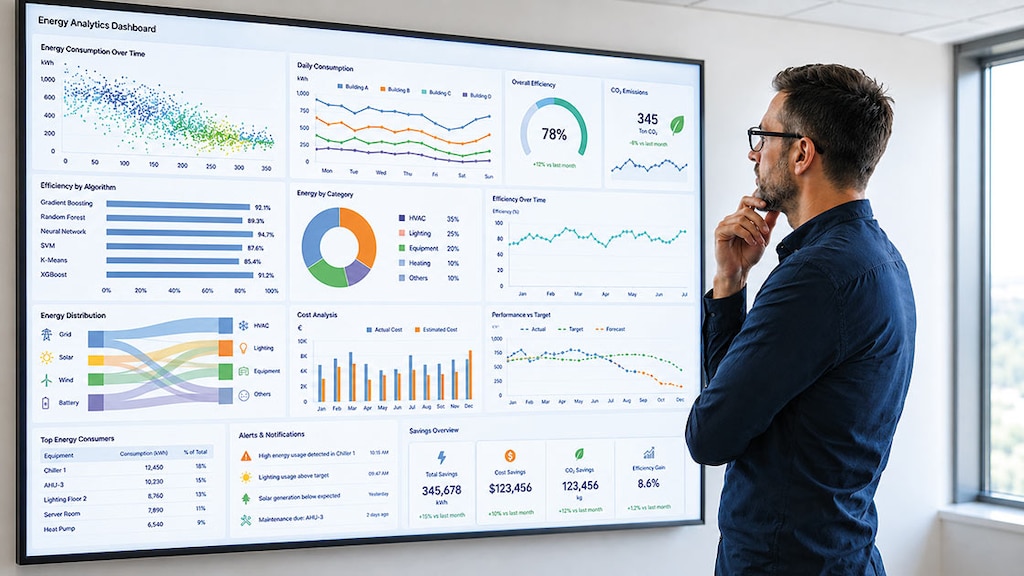
Ultimately, all computer systems transform data into useful output through efficient processing. First, we must understand the nature and structure of the information available, including its sources, limitations and representations. Given that data is often massive and noisy, we normally have to use techniques like compression and abstraction to reduce complexity and highlight signal from irrelevant information. This prepares the data for algorithms, which are structured procedures, or recipes, for extracting meaning, solving problems or generating responses to difficult questions. The efficiency of these algorithms matters deeply, as inefficient systems consume more energy and resources without improving outcomes. Once algorithms are selected, they are executed within systems, such as cloud platforms, social networks or search engines, which must be engineered for scalability and robustness.
So, if there’s a problem to solve, the theory goes like this:
- Understand the data and process it, for instance, by compressing it and creating appropriate abstractions.
- Apply efficient algorithms to the processed data.
- Finally, build systems that scale.
But above all, human agency is crucial. Algorithms and systems don’t carry intrinsic value. They only become useful when they empower people and enhance society. Technology isn’t inherently good or bad; it’s how we choose to use it that defines its impact.
Tools for a better future
I think it’s much more important to solve our current problems — access to energy, climate change, drug discovery, transport — than to worry about life on Earth in one thousand years or whether we’ll achieve AGI (artificial general intelligence). With or without AGI, we already have the tech we need to address these important societal issues. But we need engagement from society. Human agency must drive machine usefulness. We need to understand the algorithms that are so present in our lives, so we don’t get scared by them. Instead, we should understand the benefits we get by adopting them and that we have the tools to make the right decisions.
Algorithms and systems don’t carry intrinsic value. They only become useful when they empower people and enhance society
One important discussion is the trade-off between efficiency and humanity. We require effective, high-performing systems to tackle the problems that will have a positive impact on society. However, we need to be very diligent about computer use and technology adoption. If we have to build a system, let’s build the most efficient one we can. But, before doing that, let’s evaluate whether it will enrich our human experience.
I hope to inspire younger generations to learn more and take an active role in shaping our future. We need well-rounded leaders who understand technology and how it can be used to benefit society holistically. My teenage daughters are both worried about AI. They keep asking me what people will do in the future when AI can perform all tasks better than humans. We’re still in the early stages of the AI revolution. If we invest in understanding technology better and require that our leaders do the same, we can influence our future. It is in our hands. But we must all do our part. Let’s act together to build a better, more efficient society where we are productive and happy.
 |
Excerpted and adapted from Human Agency in a Digital World, by Marcus Fontoura (2025). All rights reserved. Reprinted with permission from 8080 Books. |
 |
MARCUS FONTOURA Marcus Fontoura is a Technical Fellow and Lead Architect at Azure Core, where he specialises in large-scale distributed systems, data centres and engineering productivity. Fontoura has had several roles as an architect and research scientist in big tech companies and was most recently the CTO at Stone, a leading Brazilian fintech. |