


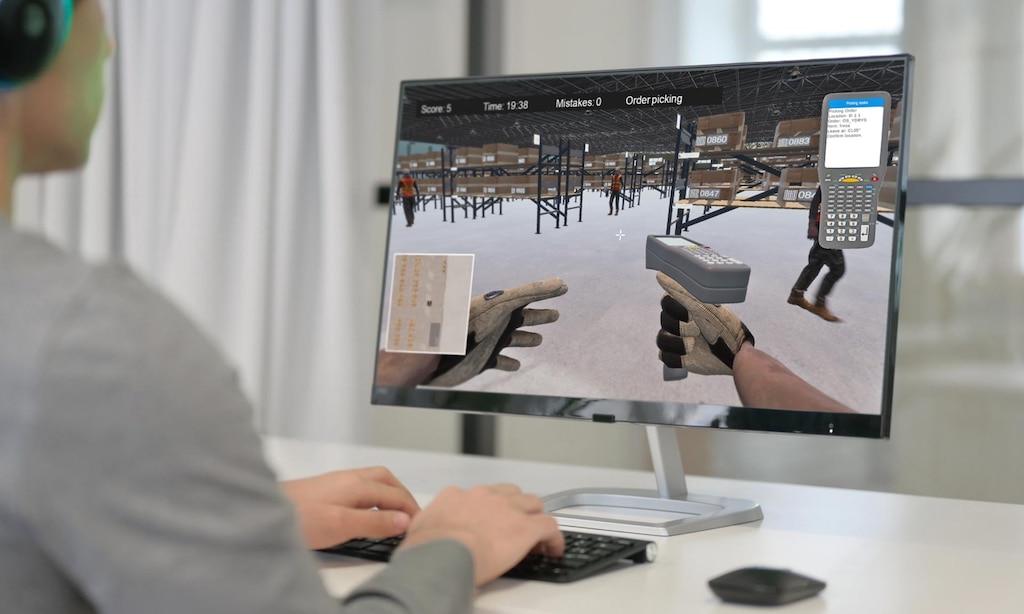
An immersive 3D environment enables engaging warehouse training tailored to each user.
LOGISTICS RESEARCH
By Juan José Romero Marras, Luis de la Torre Cubillo and Dictino Chaos García
Researchers from a study published in the academic journal Applied Sciences, in collaboration with Mecalux Software Solutions, have developed an AI-based gamification platform to train warehouse operators.
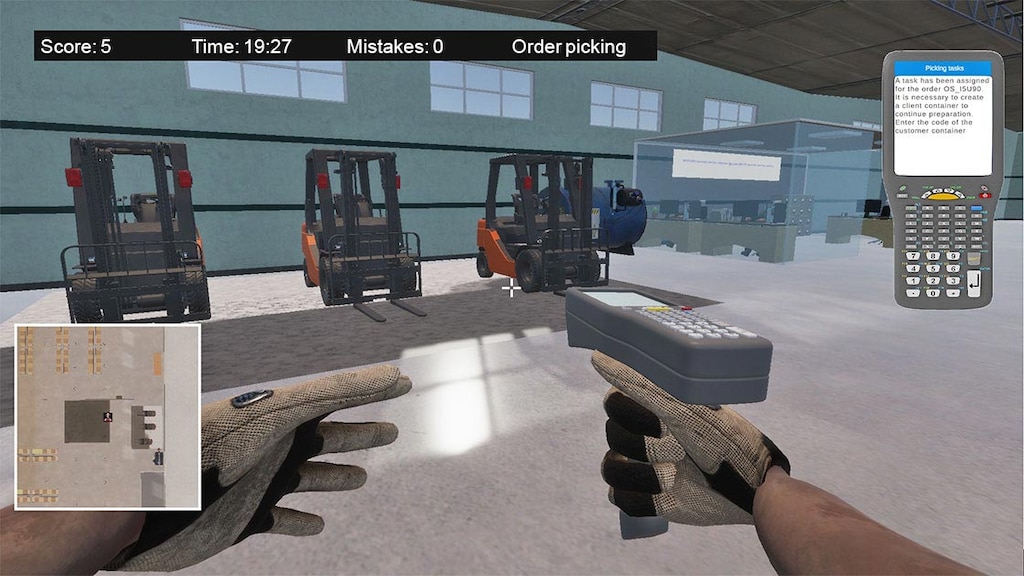
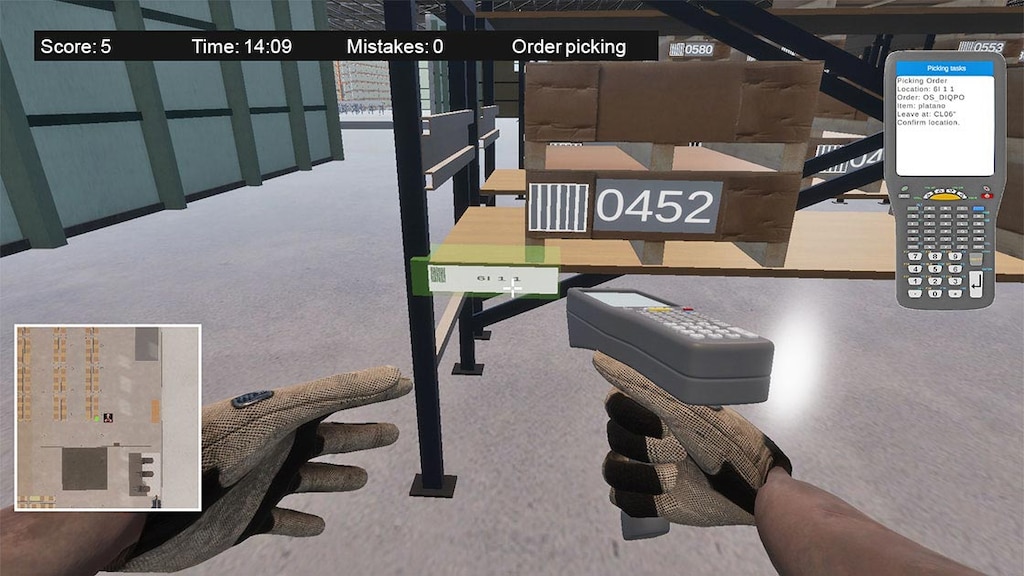
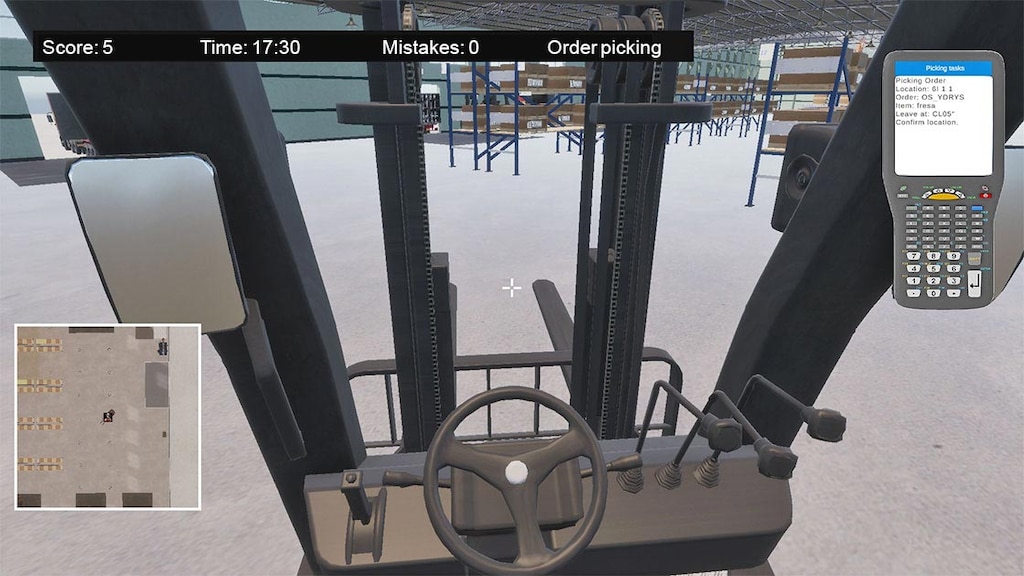
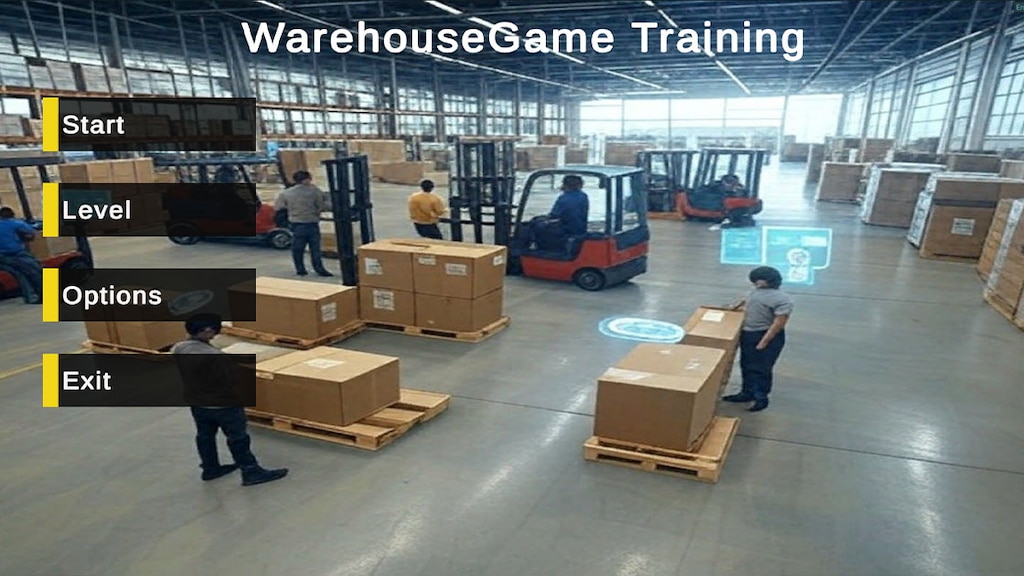
WarehouseGame Training simulates a 3D facility, replicating processes such as order picking, goods receipt, putaway and forklift operation. The virtual environment represents warehouse workflows, the equipment used and the everyday challenges of running such facilities.
“This immersive environment allows trainees to familiarise themselves with warehouse processes in a risk-free setting, facilitating a smoother and more effective transition to real-world tasks. The goal is to enhance user immersion, making the training experience more engaging and effective while fostering a deeper understanding and better adaptation to the challenges they will face on the job,” say the authors of the study.
Immersive training allows warehouse operators to carry out realistic tasks in a virtual environment
The project, part of an academic initiative, takes the form of an advanced simulation prototype designed to investigate how artificial intelligence (AI) can personalise the learning experience. WarehouseGame Training is inspired by real business case studies, integrating Mecalux’s hands-on knowledge of warehouse management and automation. This collaboration made it possible to give the prototype a realistic approach based on the actual logistics industry needs.
Gameplay: Inside the logistics learning tool
In WarehouseGame Training, players immerse themselves in a highly realistic virtual warehouse. The space features automated storage and retrieval systems, pick stations, loading docks and sorting areas.
Equipped with an RF scanner, players receive instructions from Mecalux’s Easy WMS warehouse management system. This software acts as the facility mastermind. Guided by the WMS, operators scan shelf labels and product barcodes, replicating the everyday processes of a real warehouse environment.
The training is structured into progressive levels of difficulty, with the learning pace adapted to each player’s skill level. For example, in forklift operation, the initial challenges focus on basic manoeuvres, while more advanced stages require precise coordination. Similarly, picking tasks start with simple activities and progress to more complex scenarios involving multiple simultaneous orders and time constraints.
WarehouseGame Training incorporates a scoring system that rewards players for their successes and penalises mistakes, encouraging continuous improvement. At the end of each challenge, users receive a summary of their results along with detailed explanations to enhance their understanding of logistics processes and their impact on real-world operations.
“This approach ensures comprehensive skill development, enabling operators to perform various roles and take on multiple responsibilities within the warehouse,” say the project developers.
Simulation and AI
When designing this experimental prototype, the researchers explored the use of AI technologies, including large language models (LLMs). They employed these tools to personalise and dynamically adapt the levels to each user’s profile.
At the start of the video game, participants complete a short survey that assesses their proficiency in different warehouse operations. The AI then analyses the responses, assigns an appropriate skill level and automatically adjusts the complexity of the challenges. This balanced learning curve allows players to progress at their own pace, consolidating their knowledge before advancing to more demanding scenarios. It prevents feelings of frustration from excessive difficulty and disengagement due to a lack of challenge.
|
|
|
|
|
|
The future of intelligent warehouse simulation
The research, conducted by UNED in collaboration with Mecalux Software Solutions, demonstrates the potential of LLMs in optimising simulation for the logistics sector. Building on this foundation, WarehouseGame Training — the video game designed as an academic prototype — opens new possibilities for enhancing future operators’ motivation and skills in a safe, controlled setting.
AI adapts content and challenges to each operator’s skills, enabling a more personalised learning experience
The authors point out that the current limitations of WarehouseGame Training are not setbacks but the starting point for further development. This could include refining visual aids, integrating virtual and mixed reality with LLMs to increase the degree of immersion and adding collaborative multiplayer modes to strengthen team learning and joint problem-solving.
This academic exploration lays the groundwork for future advances in logistics training, with the potential to inspire more immersive, effective and personalised learning models.
AUTHORS OF THE RESEARCH:
- Juan José Romero Marras. Product Engineering Manager, Mecalux Software Solutions (Spain).
- Luis de la Torre Cubillo. Associate Professor, Department of Computer Sciences and Automatic Control, National Distance Education University (UNED, Spain).
- Dictino Chaos García. Associate Professor, Department of Computer Sciences and Automatic Control, National Distance Education University (UNED, Spain).
Original publication:
Romero Marras, J.J., De la Torre, L., Chaos García, D. WarehouseGame Training: A gamified logistics training platform integrating ChatGPT, DeepSeek and Grok for adaptive learning. Applied Sciences, 15, No. 12: 6392 (2025).